Omsk Refinery Ablaze After Ukrainian Drone Strike — Today, July 6
This one is breaking right now. Black smoke is rising over western Siberia and NASA satellites have already picked up the heat signatures.
The Ukrainian military said its drones struck Russia’s largest oil refinery in the western Siberian region of Omsk on July 6, 2026, marking one of the deepest attacks on Russian territory since the full-scale invasion of Ukraine, with the Gazprom Neft-operated refinery located on the northern outskirts of the city of Omsk around 2,500 kilometres from the border with Ukraine.
NASA satellites recorded multiple fire hotspots at the facility on Monday evening, with Ukraine’s General Staff confirming an impact with subsequent fire on the territory of the refinery, and Ukraine’s military adding this was the last of the 11 largest gasoline producers in Russia that have been hit.
The last of eleven. That’s a systematic campaign targeting Russian energy infrastructure, and today’s Omsk strike appears to be its most distant and most strategically significant target yet.
Louisiana Pipeline Explosion: Fireball Over the Gulf Coast
The Omsk attack is the day’s headline, but 2026 has already produced two serious pipeline fire incidents on American soil that demand just as much attention — even if they generated less international coverage.
On February 3, 2026, a Delfin LNG pipeline at 575 Gulf Beach Highway near Johnson Bayou and Holly Beach ruptured during routine maintenance, sending a massive orange fireball and thick clouds of gas into the sky, injuring one pipeline worker who was transported to a hospital in Port Arthur, Texas.
Johnson Bayou High School approximately six miles from the explosion was placed under a precautionary shelter-in-place from 11:30 a.m. until 2:30 p.m., with Louisiana State Police Hazmat crews, the Louisiana Department of Environmental Quality and local fire departments all responding to the scene.
A routine maintenance operation. A 42-inch pipeline. A fireball visible for miles. One worker lucky to be alive.
Minnesota Gas Pipeline Rupture Left 650 Families Without Heat in Winter
Two weeks before the Louisiana explosion, a different kind of pipeline fire disaster hit the frozen countryside of northern Minnesota.
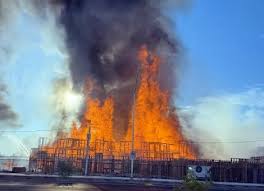
On January 16, 2026, a large natural gas pipeline ruptured west of Willow River, releasing gas that ignited in two locations roughly 1,000 feet apart, with twin columns of fire rising into the sky and 650 Minnesota Energy Resources customers losing natural gas service across Willow River, Sturgeon Lake and Finlayson.
Federal investigators in a Corrective Action Order issued the day after the explosion revealed that the pipe at the failure location was a 67-year-old pipe with known vulnerabilities, with crews working through the night going door-to-door in bitterly cold temperatures to restore service — gas fully restored to Willow River by January 20 and to Finlayson by January 21.
A 67-year-old pipe. Known vulnerabilities. Six hundred and fifty families without heat as wind chills dropped below zero. That’s not bad luck. That’s what happens when aging infrastructure runs out of time.
What the 2026 Pipeline Fire Pattern Tells Us
Legal experts analyzing the two US pipeline explosions noted they found a disturbingly familiar pattern — aging infrastructure and inadequate maintenance by companies responsible for keeping pipelines safe, concluding these were not freak accidents but predictable consequences of an industry that too often prioritizes throughput and profit over the safety of workers and communities living alongside its infrastructure.
Three pipeline fires in 2026. Three different causes — military strike, maintenance failure, and aging infrastructure. Three countries affected. One common thread — pipelines burning when they shouldn’t.
Conclusion
Today’s drone strike on Russia’s Omsk refinery is the most dramatic pipeline fire of 2026 so far — but the Louisiana and Minnesota explosions earlier this year made a quieter and arguably more important point about the infrastructure risk sitting in America’s own backyard. Pipeline fires don’t only happen in war zones.
Frequently Asked Questions
Q1: Where is the pipeline fire today? Today’s most significant pipeline fire is at the Gazprom Neft Omsk oil refinery in western Siberia, struck by Ukrainian drones on July 6, 2026.
Q2: Were there US pipeline fires in 2026? Yes — a Delfin LNG pipeline explosion in Louisiana on February 3 and a natural gas pipeline rupture in Minnesota on January 16.
Q3: Was anyone killed in the US pipeline explosions? One worker was injured in the Louisiana explosion; no injuries were reported in the Minnesota rupture.
Q4: How old was the Minnesota pipeline that exploded? Federal investigators found the failed pipe was 67 years old with known vulnerabilities.
Q5: Who is investigating the US pipeline explosions? The Pipeline and Hazardous Materials Safety Administration (PHMSA) issued a Corrective Action Order in the Minnesota case and is the lead federal pipeline safety investigator for both US incidents.
pipeline fire today, pipeline explosion 2026, Omsk refinery fire Ukraine, Gazprom Neft Omsk fire, Ukraine pipeline strike July 2026, Louisiana pipeline explosion 2026, Minnesota natural gas pipeline fire, Delfin LNG pipeline explosion, pipeline fire news today, PHMSA pipeline investigation 2026, Johnson Bayou pipeline fire, Willow River Minnesota pipeline, pipeline safety 2026, aging pipeline infrastructure fire, Russia refinery fire Ukraine drones